
8 Practices (Sans Camera) That Helped Me Improve My Photography in 2025 – Part I
Behind the Lens #2
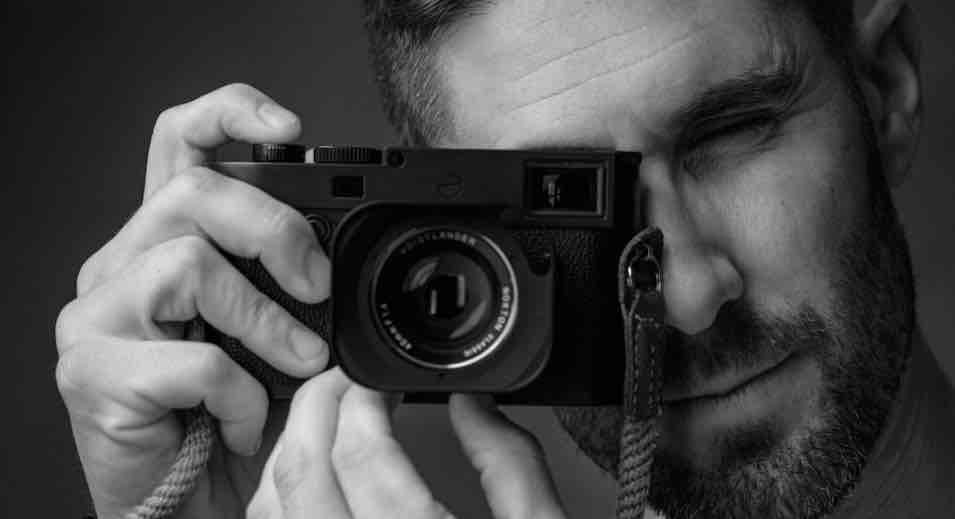
As we wrap up 2025, I have spent a lot of time reflecting on my work with the camera in my hand. However, depite taking nearly 8,000 photographs within the calendar year, I would likely attribute most of my development to what I did before and after my photowalks.
With that in mind, I thought it might be beneficial to share some of these practices with y’all, and for two reasons:
For starters, my hope is that these insights might too help others who are looking to grow in the craft. But also, my intention with all of my Substack and social media posts (including this one) is to help folks better understand and connect with the person behind the lens.
I. Journaling After Every Photowalk
This year, I began doing formal portfolio reviews with someone I truly respect (more on this later). One of their recommendations was to begin journaling after every session I have on the street.
Using Notion as my platform of choice (for nearly all of my digitial note-taking), I created a “Field Notes” database on the app, which allows me to create properties within the database for categorization purposes. I can then filter/sort by those properties (much like a spreadsheet) retrospectively when I need to references prior entries.
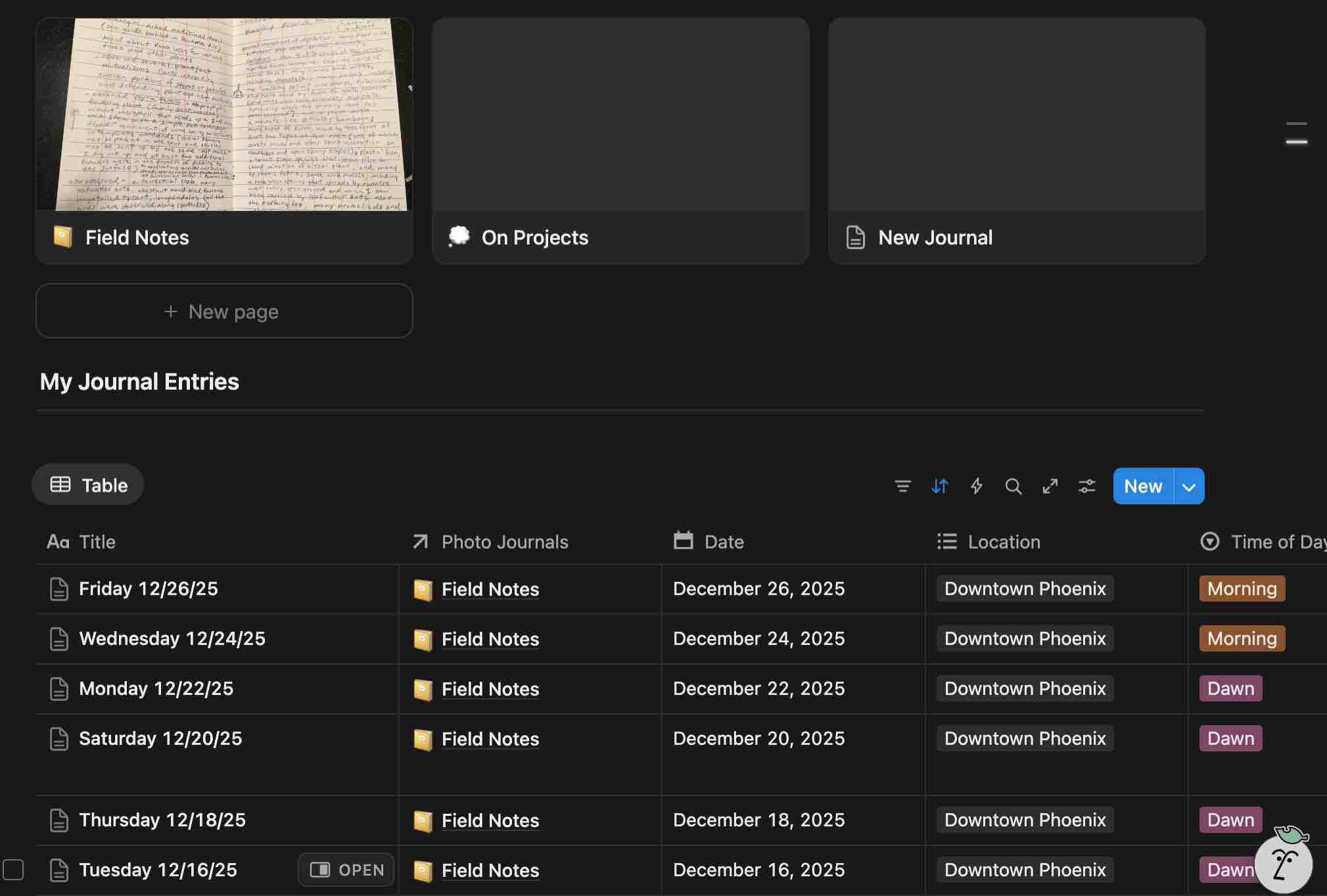
To date, I have nearly 80 journal entries. Within each one, I have five main headers:
Overview — a quick synopsis of the walk, my mindset going into it, any constraints (e.g. traffic was terrible and thus I arrived later than expected), etc
Portrait — notes pertaining to any street portraits taken; not only does this include the technical bits, but it is also a place where I log their name and as much of their story as I can remember. I always spend time with whom I make portraits, so afterwards I want to ensure I do not forget what they shared with me
Detail – notes involving any photographs made of the finer details on the street; I like to think of this as portraiture of inanimate objects
Place – write-ups on photographs that depict or convey a sense of place, like a building, alley, etc.
Scene – non-portariture work involving people or “action”
Overall, I attempt to write down what I was thinking leading up to specific/memorable moments on the street, what drew me to it/them, what creative choices I made for the photographs, and how I think I faired in their making.
II. Not Reviewing Photographs Until Journaling is Complete
Relatedly, one of the key recommendations I received in regards to journaling was to put off reviewing photos from a photowalk until after journaling. For me, this relationship between journaling and post-processing is crucial, largely because it keeps my focus on the process as opposed to the outcomes.
Photography is just my “hobby”. In the real-world, I am a Sport Scientist (and former Strength & Conditioning Coach). One of the main lessons nearly all high-level practitioners in the world of athletics teaches their athletes is to more stock in the process as opposed to the results. Athletic development (much like photography), is a long game. For most athletes, especually within the sport that I work (professional baseball), it will take years – if not decades – to reach the highest levels. So, each individual performance on the field or pitch pales in comparison to the value of the mundane: deliberate, daily practice.
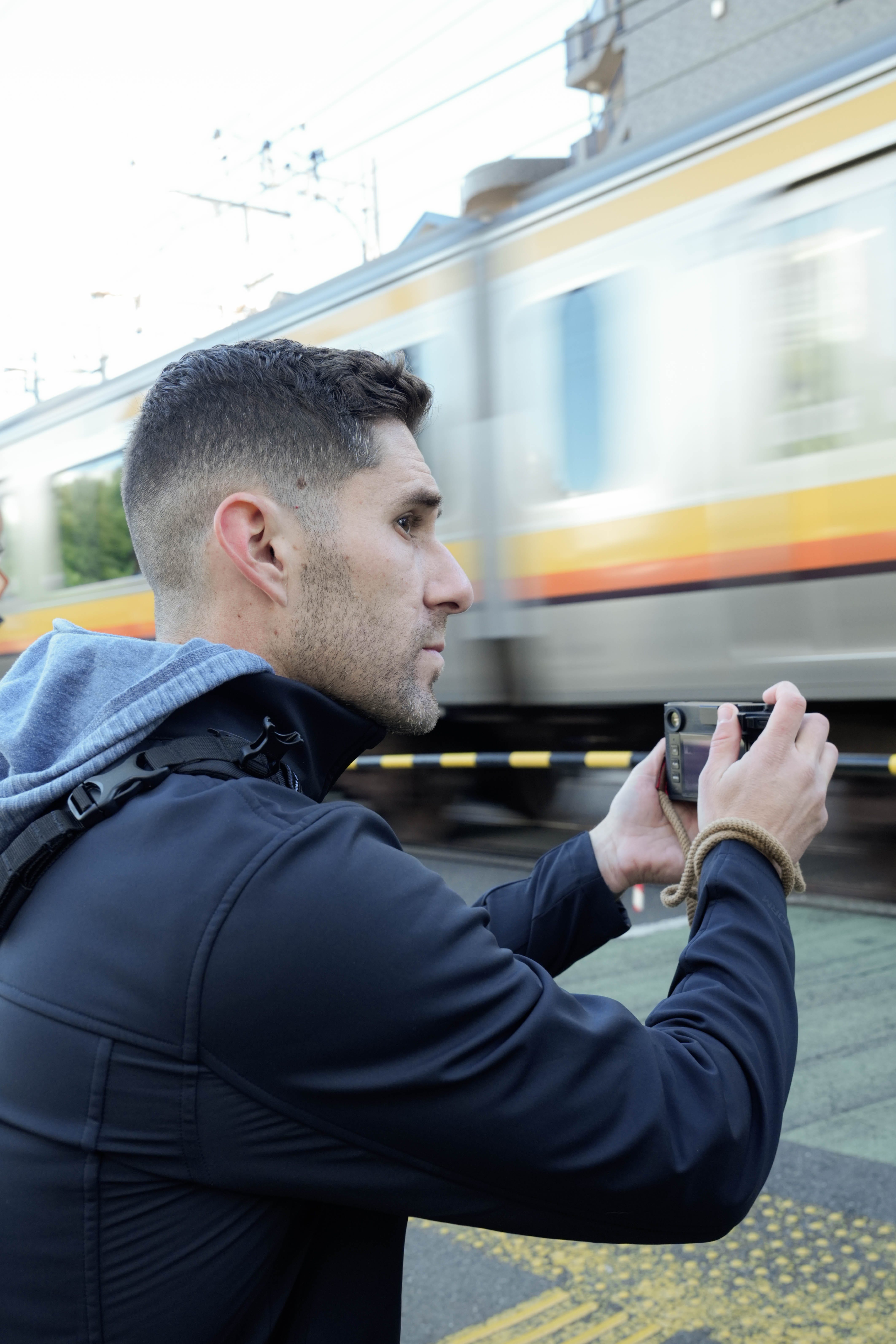
You might have heard of the concept called the aggregation of marginal gains. This is premise of making tiny bits of progress every single day that, when added up over long periods of time, lead to large, meaningful changes. In sports, that is showing up every day to practice with a plan, lifting weights and eating with a purpose, having both long and short-term goals, etc.
But, this concept is not exlcusive to sports. Practically every field or profession can prescribe to this line of thinking. Thus, I take the very same approach to my photography. Since there is no firm timeline, I can focus on learning and developing from every photowalk, rather than letting every outing hinge on how many “banger” photographs I produce.
III. Studying Photobooks, Taking Notes One by One
In 2025, I have studied a total of 12 photobooks. At one per month, that is not really all that many, is it?
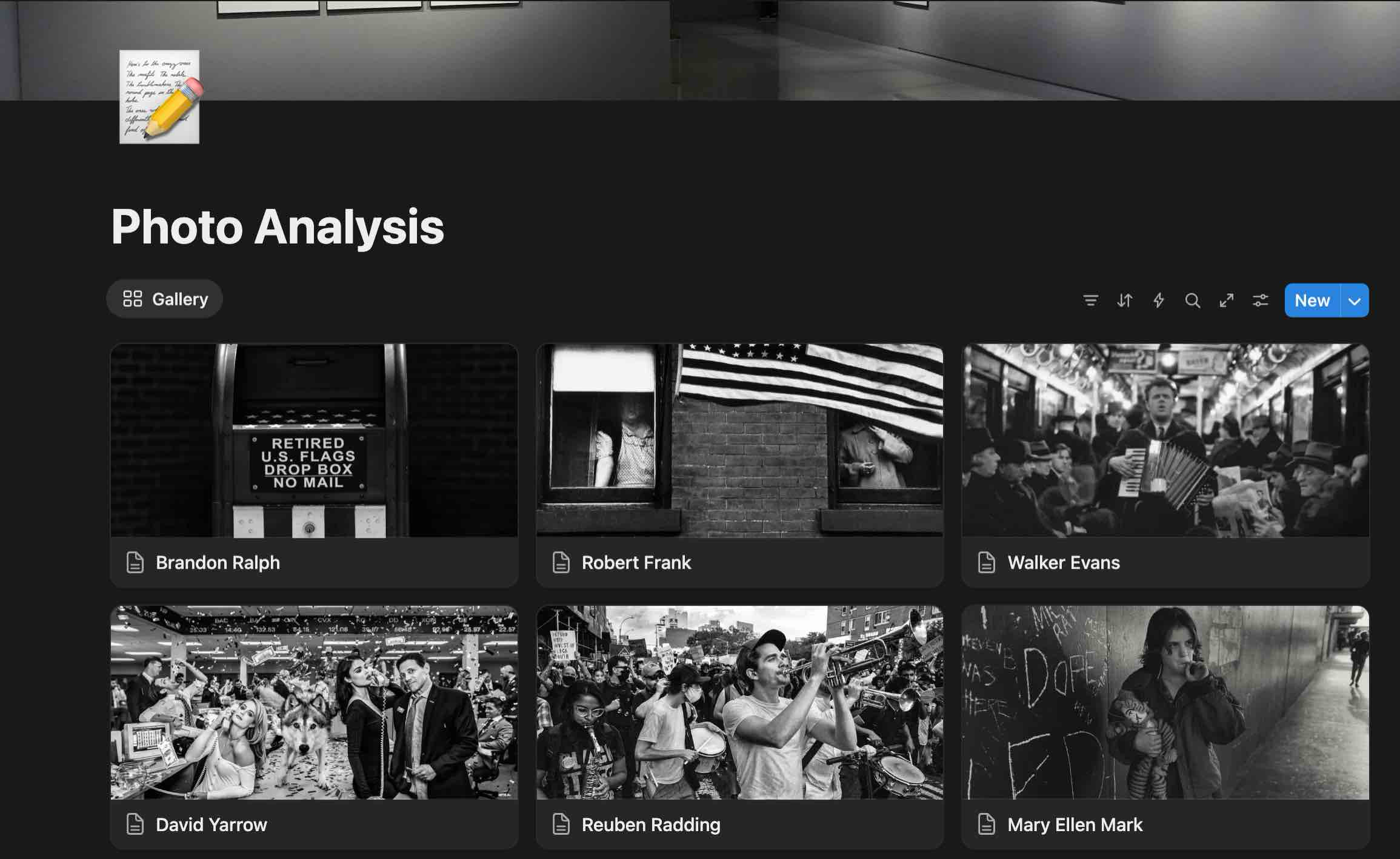
But, much like my journaling process, I try to be intentional with how I learn from the work of other photographers. Those 12 photobooks can actually be quantified in another way: I have reviewed and taken notes on nearly 1,200 photographs this year.
My photobook studying process – much like my journaling – involves me using a Notion database where I create an entry for each photo that I study, tag it for categorization purposes (Artist, Book, Genre, etc), take notes on it, and then snap a photograph of the image with my phone for quick referencing on the go if ever needed.
For ~3-5 photographs per day, 4-5 days per week, I take notes on what I see and feel in each photograph – e.g. composition, exposure, and creative decisions (my best guesses on focal length, aperture, etc), and my reactions to the photograph. Then, upon finishing a photobook, I take notes on specific contextual themes on the work itself (inspired by Terry Barrett’s framework in his book, Criticizing Photographs).
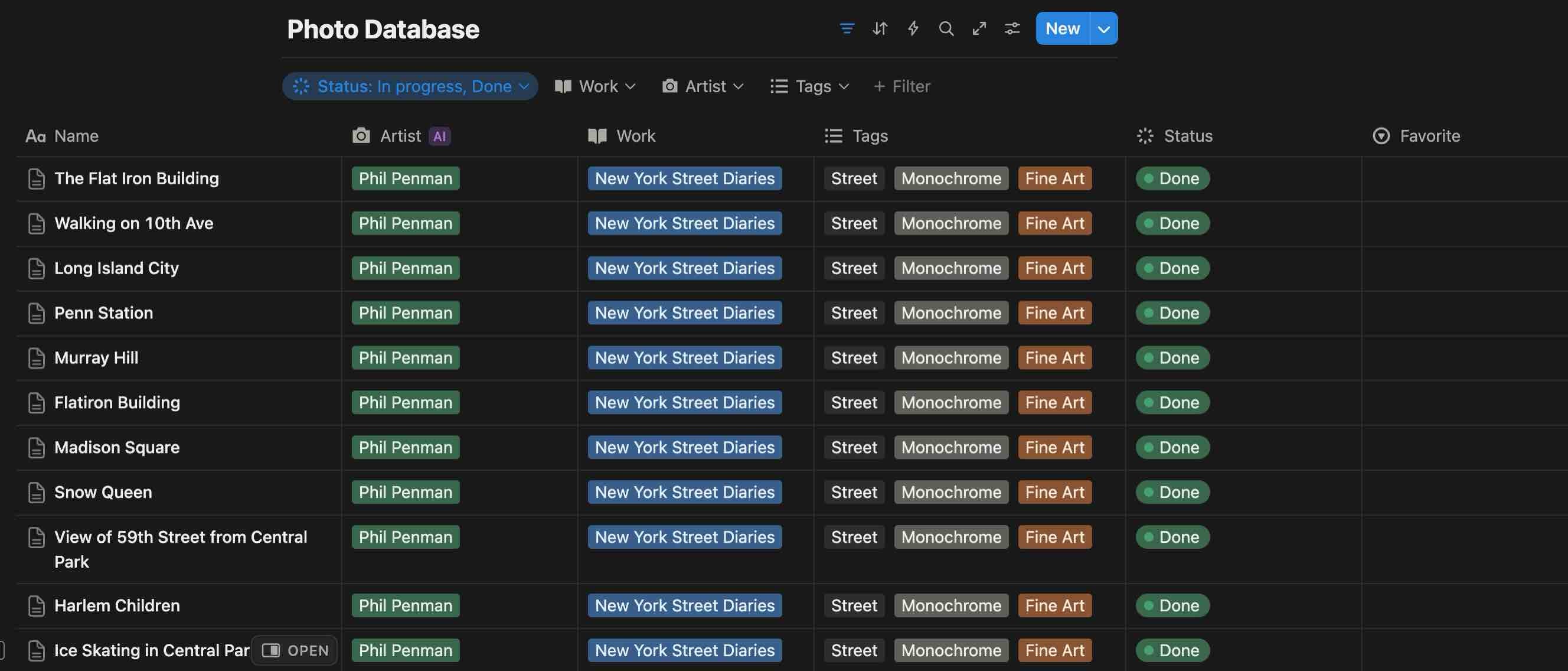
For me, personally, this process helps me “get reps without the reps, so to speak. In other words, it helps me work on my photo-making skills without needed to make photos, which is a huge value add for someone like me who has limited time to be out on the streets. And, it has helped me build a library, if you will, of what is possible in my own work.
IV. Regular Portfolio Reviews/Critiques
As noted in section (I), this summer I began the process of having my work reviewed formally as a part of a portfolio review. I found somebody that I truly trust and respect, but that I also did not have a personal relationship with prior. The latter detail is important, because I want to make sure that somebody impartial and unbiased is evaluating my work.
As I continue to work through my project American Dream: a Portrait of America, we have decided to meet 2-3 times per year, making the portfolio review process a staple part of my workflow; it has become a space for me to not only get feedback on specific images, but also a place for me to productively soundboard my ideas and thoughts on the direction of the project and my own development in general.
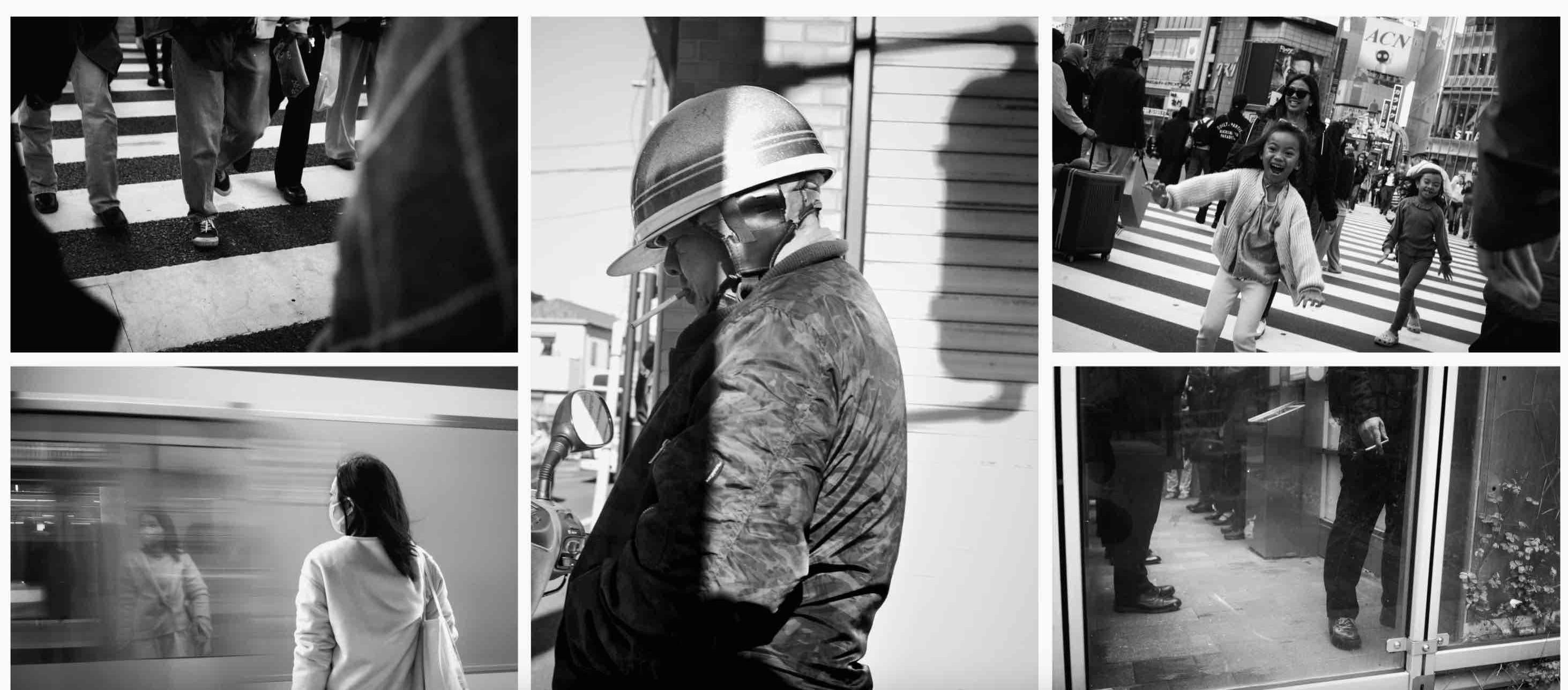
Additionally, I have found a place for less formal critiques of my work. These “crits” involve meeting regularly (approximately every 6-8 weeks), and standing before a group of photographers of various levels of experience and all different photographic backgrounds, and presenting ~10 new images since the last time we met. Then, over the course of 10 minutes, we are allotted the opportunity to discuss the work and collect feedback. I am very thankful for The Art Intersection having this regular event, as I know not every city has such a place or opportunities.
Overall, between the formal and informal reviwing process, I believe I can find a stronger signal in all of the noise when it comes to how my work is developing. Social media, albeit a necessary part of photography these days, just isn’t a reliable barometer for personal growth and development in photography. So, finding other, trustworthy (yet diverse) avenues to get feedback and advice on our work is an invaluable step in the process.
Check out Part II of the series by clicking the button below!
Lots of great tips here!
Very beautiful black &white photos!!! I do not read english well but it seems very interessant