
Getting Closer
The quiet decisions behind my favorite photographs.
I got much more than I bargained for this Fourth of July.
Given the subject of my long-term project — American Dream: A Portrait of America — the Fourth of July naturally stands out as a day to get out with the camera. To document Americans celebrating in ways they believe are most American. Fireworks, cookouts, parades and the like.
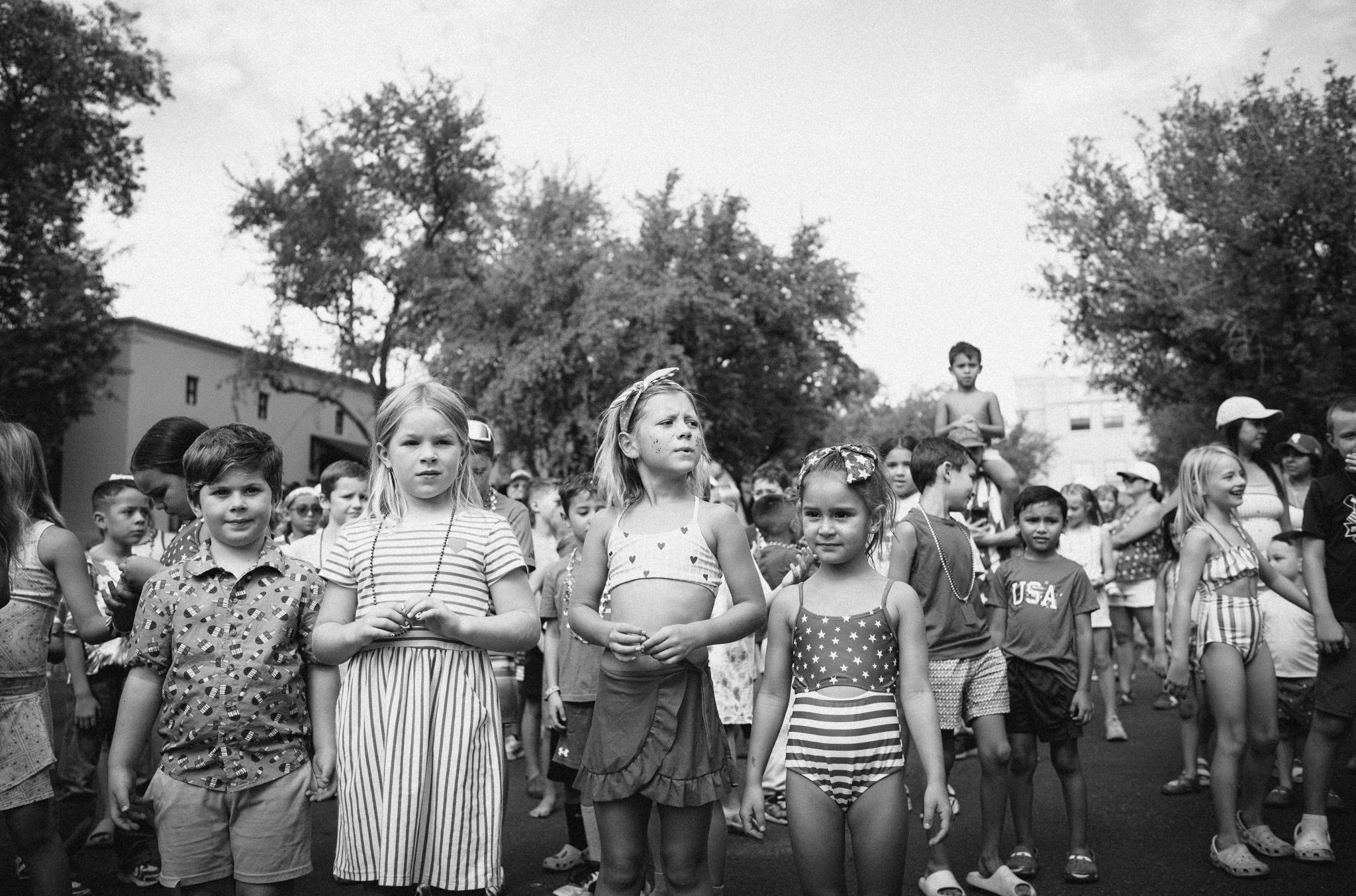
This year, rather than photographing the fireworks at night, I chose to head out in the morning to a local event in a nearby suburb — a Walk ‘n’ Wheel parade where parents and kids decorate their bikes, scooters, and golf carts and ride on through the small-town downtown of Verrado, Arizona.
I arrived just before the event was due to kick-off and immediately began navigating the scene with the camera. What I saw was quintessential made-for-television suburbia. Parents with their lawn chairs; hundreds of kids racing around the street on bikes; tassels and ribbons and stars and stripes.
Here comes the firetruck! I heard the PA announcer for the event holler into the microphone.
And to my left I saw what I had failed to notice as I was making photographs: a bright red fire engine had backed up not 10 feet behind me, and two firefighters were snapping their hose into place on the nearest hydrant. My gaze traced the hose from street level up to the side and to the top of the fire truck where a third fireman readied the nozzle.
Are we ready kids? The announcer yelled to the crowd.
To my right and facing the firetruck was a wall of children at the ready. And there I found myself in the crosshairs, right in between the firemen and their intended targets.
In that brief moment, I weighed my options:
Get out of the line of fire and photograph the deluge as a (dry) observer from the sidelines?
Or hold my ground with my camera and become a (soaked) participant in the action?
I looked down at my Leica, unable to recall how weather-sealed it was.
But I had made my decision.
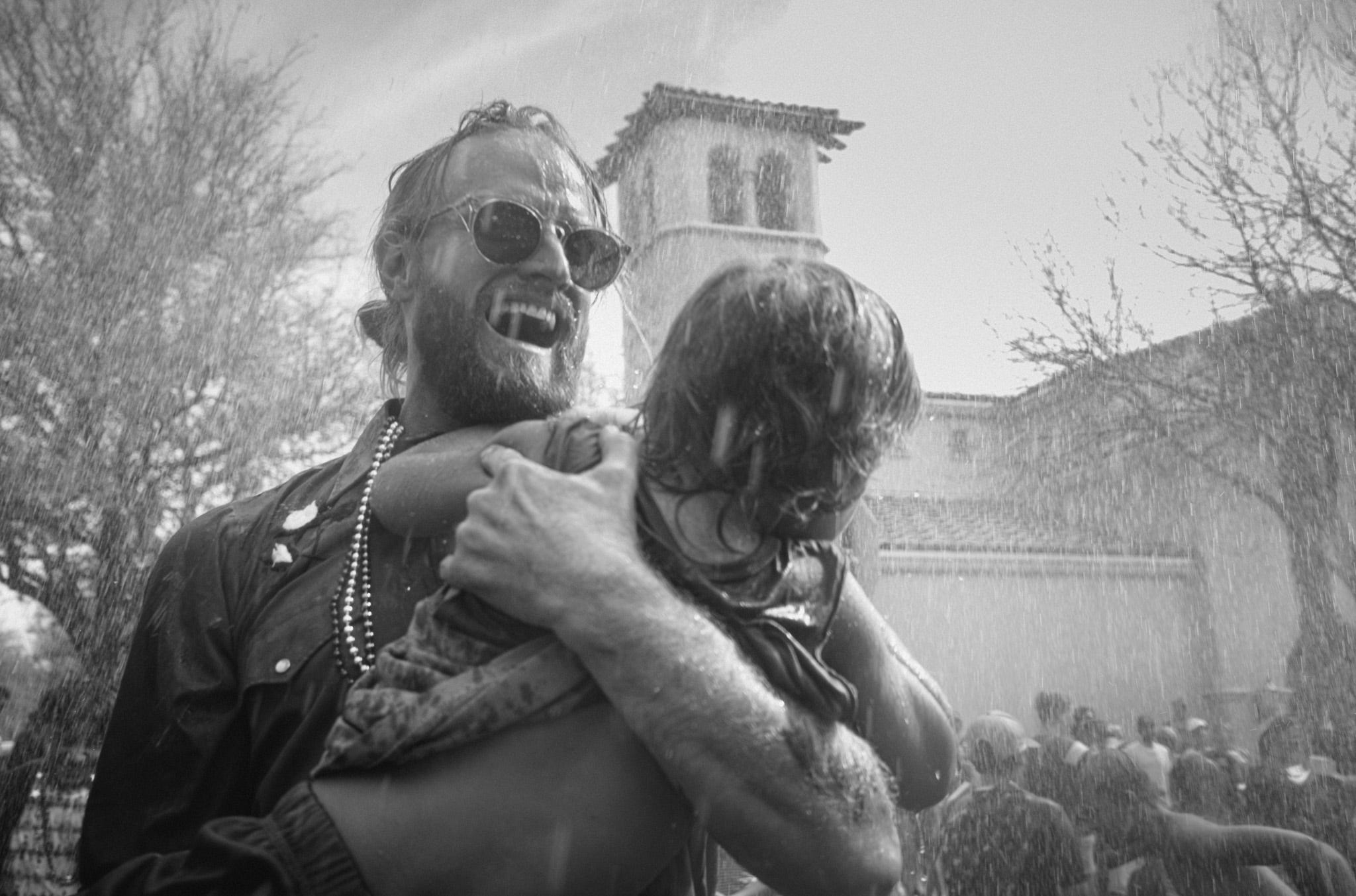
I chose to get closer to the photograph. And the camera survived.
Physical Proximity
Driving away from that Fourth of July event, soaked from head to toe in the seat of my car — I had not yet seen the photographs, but I already knew I had made the right decision.
Not because of the experience itself, but because it was the same decision that I had made many times before. A decision that, more often than not, has led to some of my favorite images.
The decision to get closer to the photograph instead of farther away.
But getting closer doesn't always mean taking risks or embracing discomfort. Instead, it means choosing proximity in whatever way is necessary. In the case of this past Fourth of July, it was physical.
Sometimes the shortest distance between us and a better photograph is a simple step forward.
Relational Proximity
Other times, choosing proximity means connecting with people before the images are made.
Ironically, just a handful of weeks prior I was involved in another drenching situation. I came across an entire neighborhood of kids out in the streets of Cleveland, Ohio, playing in the water from uncapped fire hydrants.
These types of photographs live in the lore of street photography history, so encountering a situation with this kind of potential immediately got me excited. However, as much as I just wanted to dive right into making photographs, it was important to me to establish myself within the environment first.
Before ever releasing the shutter, I canvassed the front porches along the intersection to speak with the adults on site. I explained who I was and what I was about:
“My name is Ryan. I am a documentary street photographer. I just saw the water coming down the street and had to check out what was going on. This is awesome for the kids! If y’all don’t mind, I’d love to take a few photos while I am here? I don’t want to cause any trouble, though, so if not, no worries at all.”
Their willingness to have me there allowed me to comfortably settle into the scene as it unfolded, not worrying about who I might upset. That is, until I heard some shouting from behind me.
“Heck no! Don’t you take photos of my child!”, a woman shouted from one of the porches that I only then realized I had missed.
I stopped making photographs and walked over, nervous that I had just become a perceived intruder, possibly ending my time photographing the activity. However, after apologizing profusely, the group of parents on the porch encouraged me to stay as long as I liked.
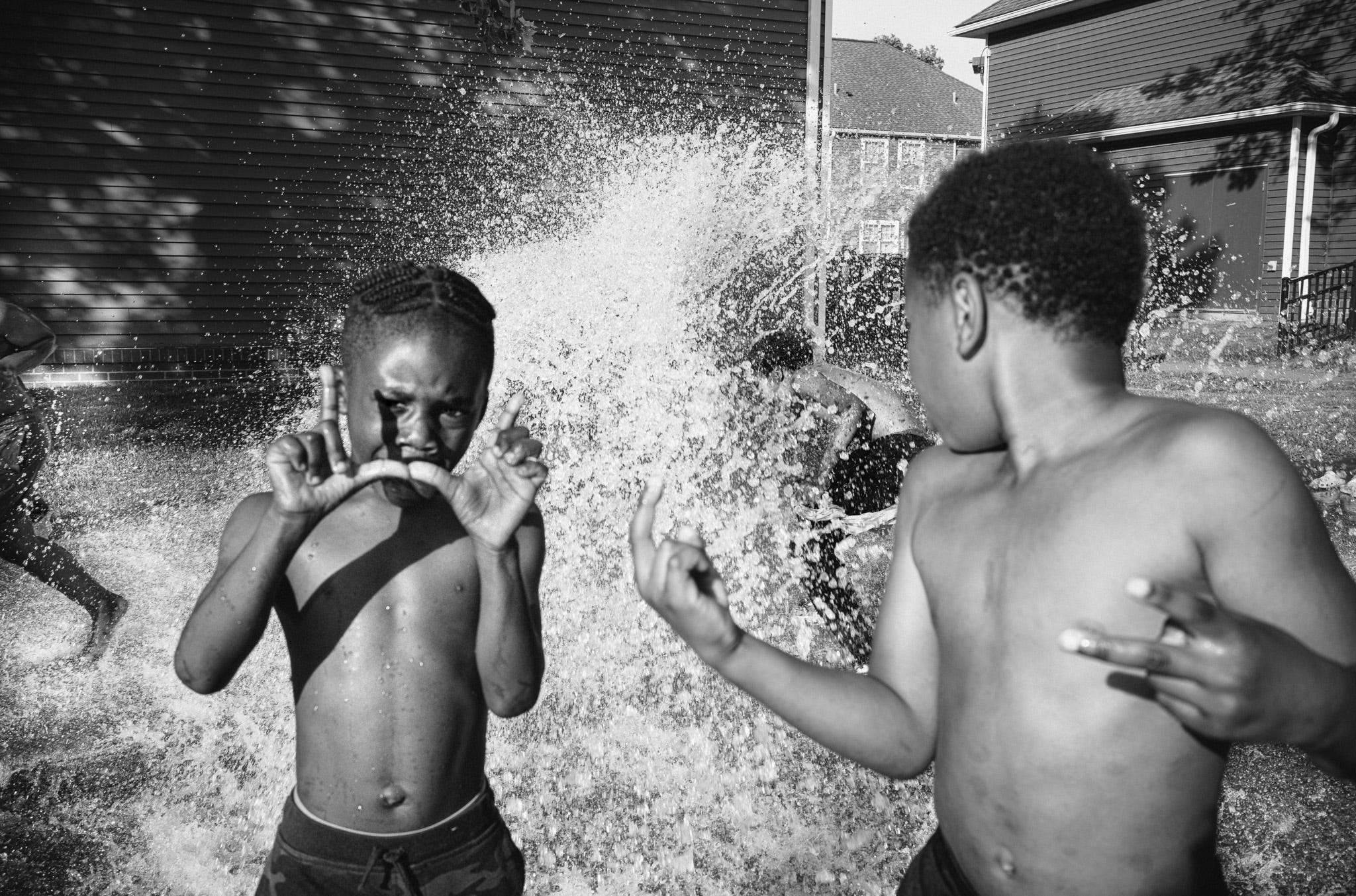
Ultimately, this is what I would consider a core memory for me in my photography journey, and I have at least one image that will probably stay with me forever. And it all hinged on what seemed, at the time, like a small, almost imperceptible decision.
So often in street photography, we think of courage as shooting first. In reality, this moment required something different.
Unlike the Fourth of July, boldness came not from standing in the water, but walking onto the porch first.
Emotional Proximity
There are also times when physical proximity plays a vital role in the picture-making process. This happened to be the case with one of my favorite images — a portrait of Tim.
I met the man within the first five minutes of an early spring photowalk in Cleveland this year. I came across a vehicle parked on the side of Prospect Avenue, with American flags, ribbons, and decals all over it. At the time, I thought the car was empty, so I got in really close, only to be startled by someone popping the laid-back driver seat up and rolling down the window.
I apologized for invading his space, and then introduced myself. Tim shook my hand and launched into his story — about how he was trekking across the country to get to Washington, D.C. for the celebration of America’s 250th Anniversary, and all about his journey to that point. And not just his recent past, but nearly his entire life story.
As I listened, I knelt down next to the open car window, forearm propped up on the door. I did not photograph at all, but eventually thought the moment too great, his story too strong to not photograph him as he recounted it.
I weighed my options.
Should I ask him to step outside and make a portrait with the vehicle? It felt like this would really break the emotional connection between the viewer and the story he was telling.
Maybe I could come around to the driver side and make an image from just outside of the window? Sure, he could keep telling his story, but we would lose an awful lot of context.
Plus, the car itself — the door and window — would become a physical separator between the viewer and Tim, which would likely become an emotional barrier within the image.
Or maybe, just maybe, I could get my camera into the vehicle — photograph him as he told his story while we were seemingly in there right beside him?
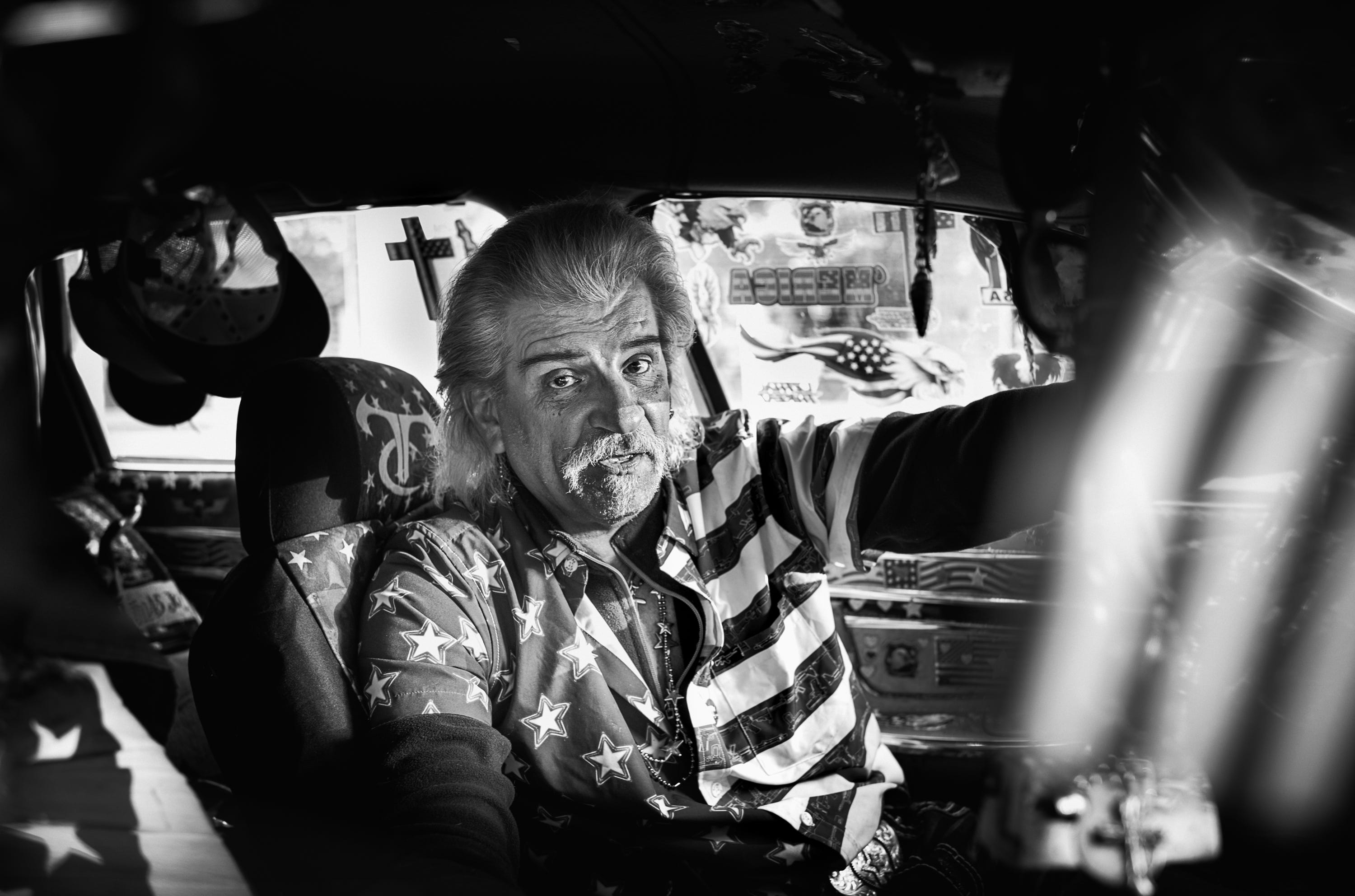
As Tim told his story, I moved the camera through the open window and gave a little gesture — not enough to interrupt him, but enough to insinuate my request for permission. He nodded his consent and I carefully composed the photograph while listening to the rest of his tale.
This decision — how to compose a portrait of Tim — was an ordinary one. We are always weighing our options for making images. But it was the choice to move closer physically that ultimately brought the viewer close to Tim emotionally.
Collaborative Proximity
Sometimes this proximity comes, however, by allowing others to be a participant in their own photograph.
I know, this sounds counterintuitive, but hear me out: just because we are photographing someone else, it does not mean we are letting them be a full stakeholder in the image-making process.
This is normal in a lot of cases. However, the interaction can become stronger — and the photographs more powerful — when we give those we photograph some stake in the process. Considering not just the photograph we want to make, but how they might like to be photographed.
I was recently photographing a new public basketball court in Downtown Cleveland with a fantastic local street photographer (and ambassador to the city), Doriyan Coleman . Though I was certainly intrigued by those competing, there were these two kids — brothers as it turned out — that caught my attention as they dribbled alongside the court. What a cool image could be made, I thought, if I could catch the adults playing on the court and the kids playing just off of it.
After we had hung out with the entire crew for 30 minutes or so and eventually met the boys’ parents, Doriyan began making polaroids with the kids. The boys were delighted.
I did not want to infringe upon their portraits, so I took my attention elsewhere. However, a few minutes later, the boys asked me if I was going to photograph them too.
Before I could revert back to my original idea for the photo, the brothers began directing me, and I stopped trying to be the sole author of the image. Instead, the boys and I became co-authors.
Take our photo here.
Now, just me.
Now this way — no, no, that way.
Okay here! Now there!
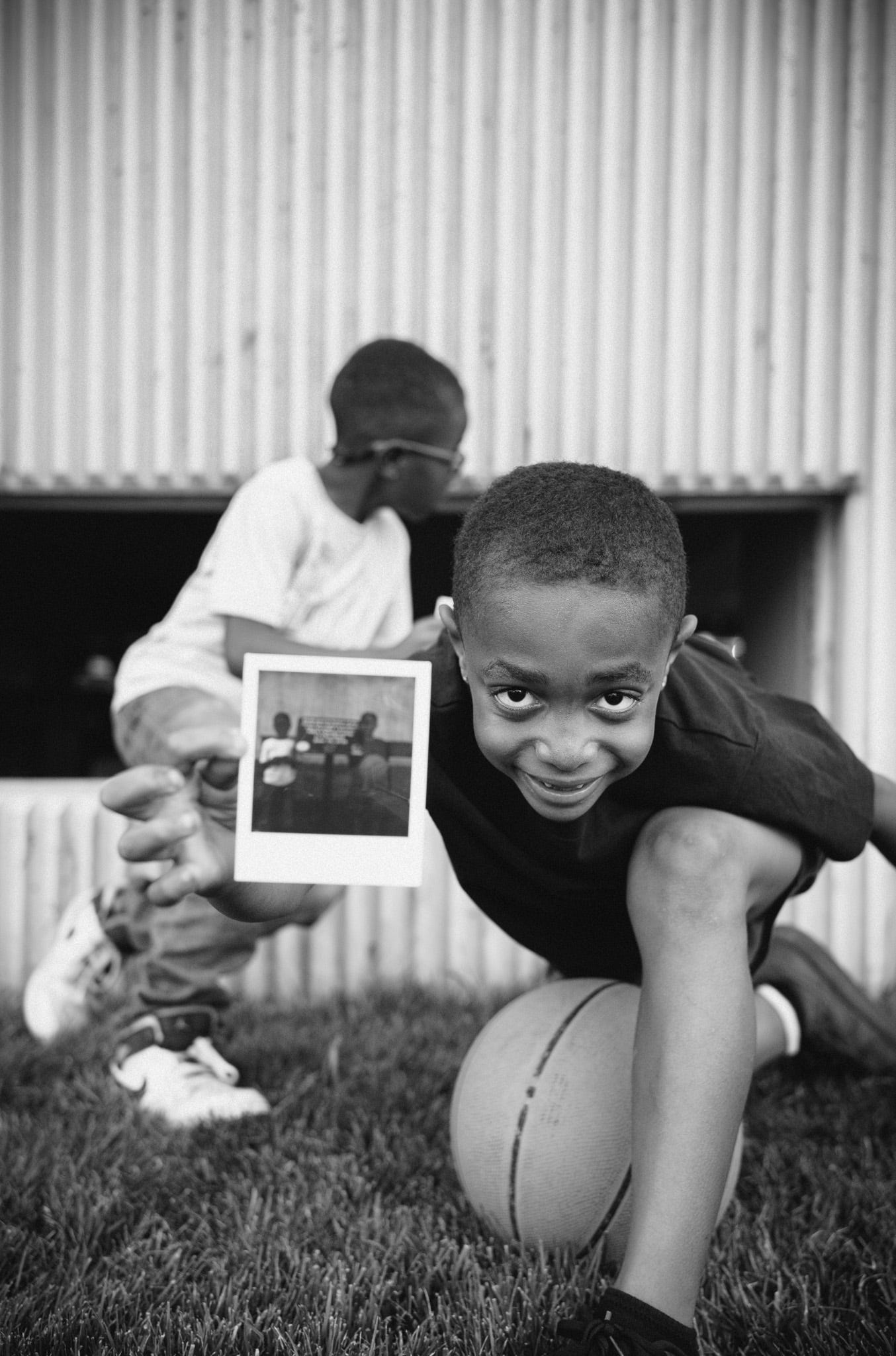
In most of the photos that I made, they proudly showed off their polaroid from Doriyan Coleman. And, not a single part of this was scripted or coached by the photographer. It was all the children. They took ownership of the process, bringing us all closer to the photograph.
The decision to relinquish control seemed inconsequential at the time. But it was this partnership that ultimately made the images ours.
A Philosophy of Proximity
Thinking back on the Fourth of July, the key for me wasn’t in the waterworks. Rather, it was the realization of what seems to be driving my work these days.
Getting closer.
Closer to the people.
Closer to the moment.
Closer to the photograph.
What this asks of us, as photographers, can differ in each and every scenario.
Sometimes, it asks us to jump right into the action and get soaked in the process.
Other times, it asks us to listen before we press the shutter.
And sometimes, it asks us to give up some of our artistic control.
But in nearly every case, it asks us to find a way to get just a little bit closer.
Thank you for this. I’m always so nervous to ask for permission to take a shot. Now I know then interaction is most of the journey.
Awesome, Ryan